I am a student working towards a career in electrical engineering. I am most interested in the point where electronics, code and mechanical design meet, and I learn best by building something real and then finding out what is wrong with it.
Each project below sets out what I was trying to achieve, how I designed and built it, what went wrong, and what I changed. The full write-up for each one can be opened from its project section.
April 2026
Custom H‑Pattern Gearbox
for Sim Racing
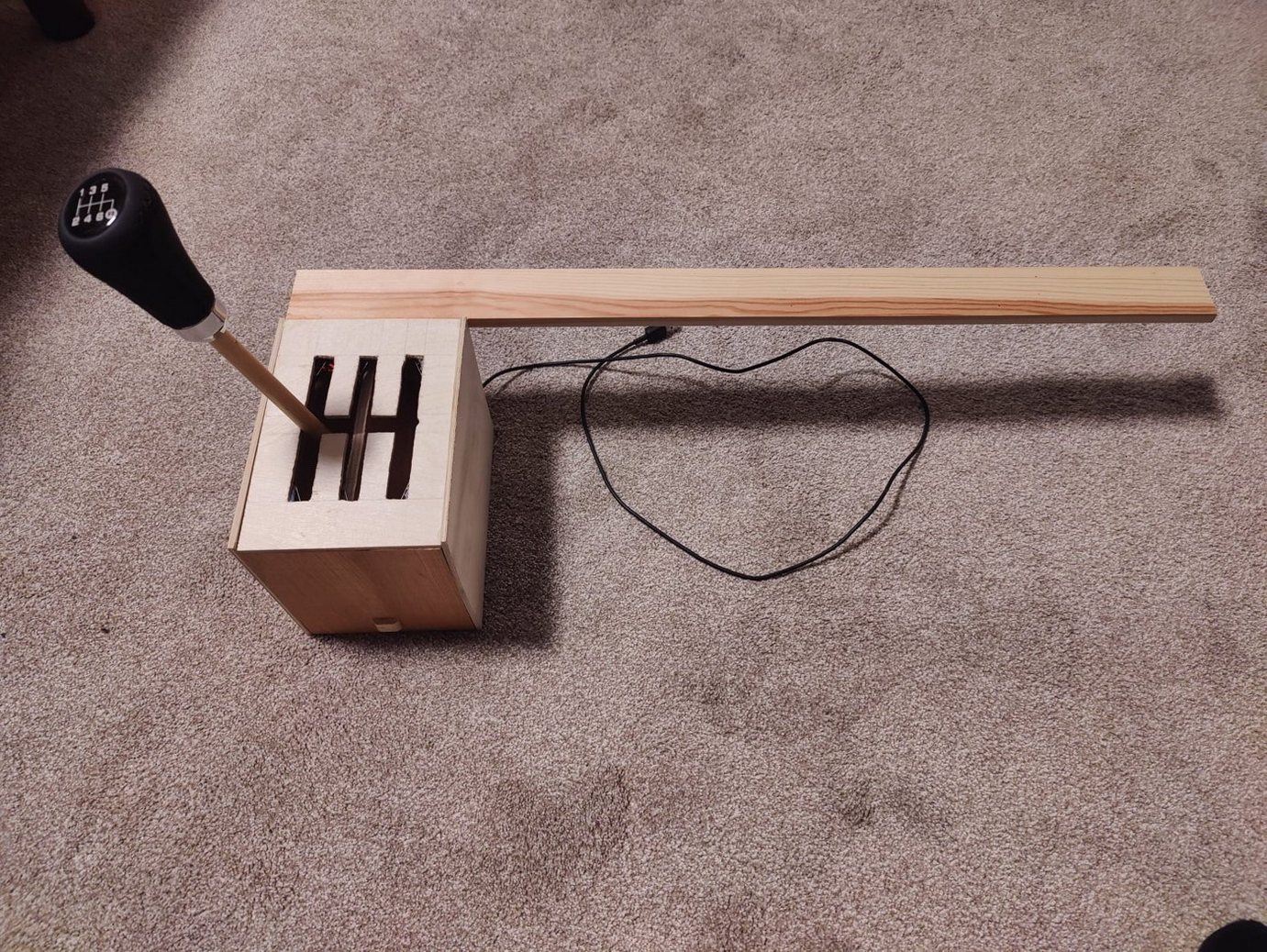
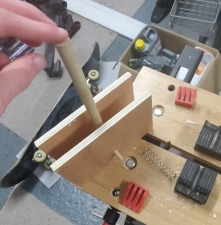
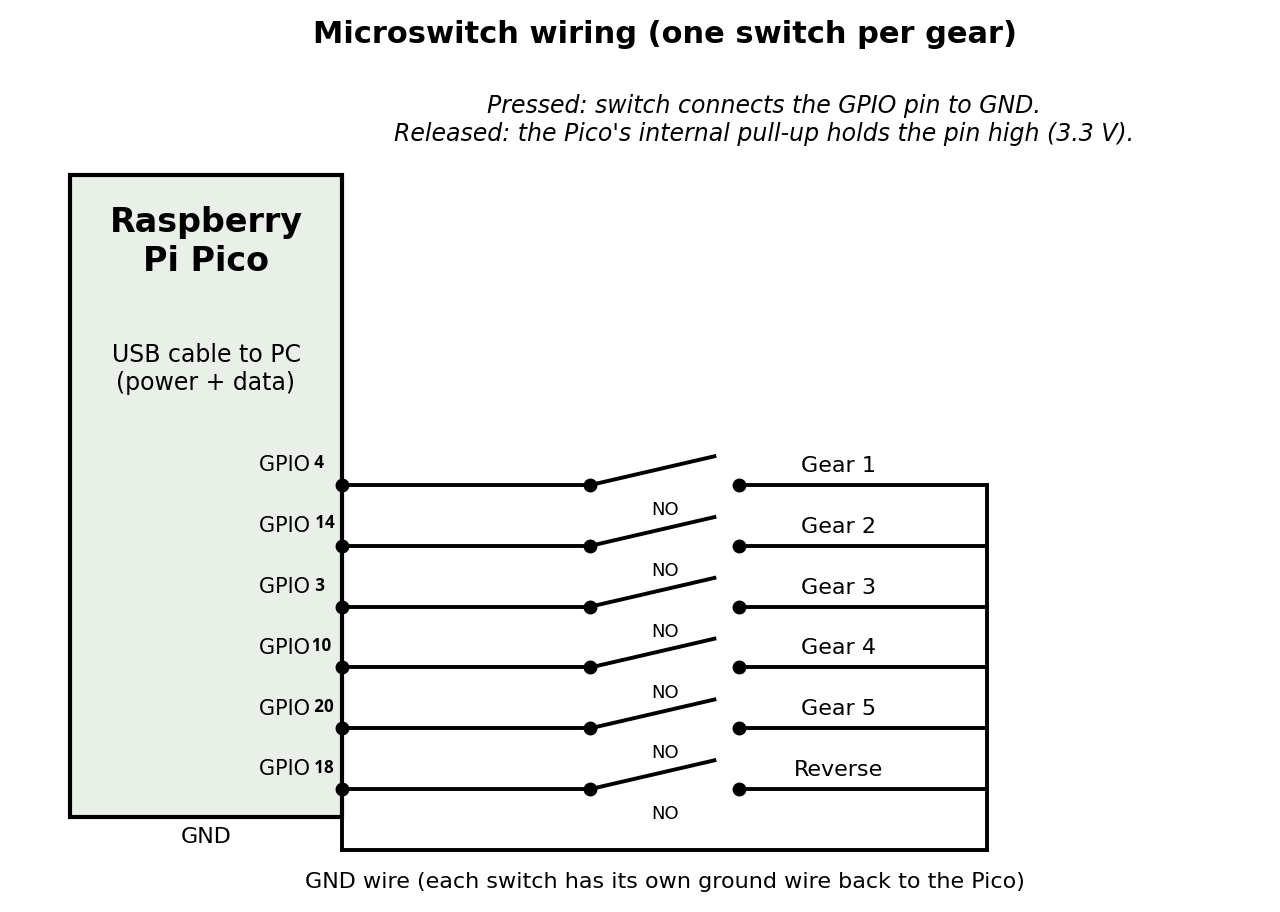
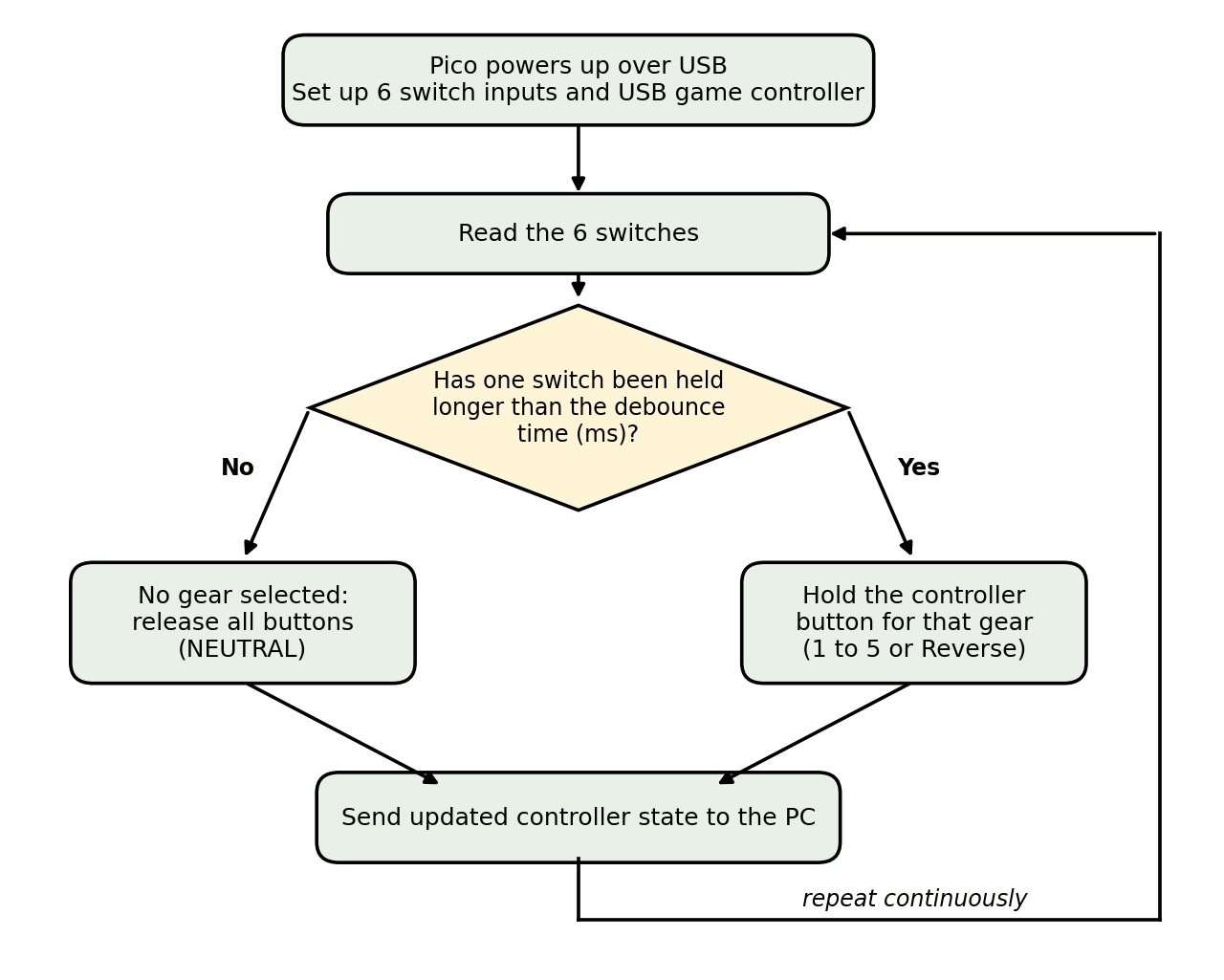
The finished shifterThe box is glued to a timber batten that slides under the desk, so the steering wheel's clamp holds both the wheel and the shifter.Two-axis gimbal pivotThe inner box carries the lever and lets it tilt forward and back. The whole inner box rotates in the main housing to give the left-to-right movement.Wiring schematicSix microswitches, one per gear, each on its own GPIO pin and ground. The Pico's internal pull-up resistors make the inputs active-low, so no external resistors are needed.Software logicThe Pico reads the switches continuously. A switch must be held for a set debounce time before its gear button is pressed; with no switch held, all buttons are released, which is neutral.
Objective: To design and build a working five-speed-plus-reverse H-pattern shifter for PC sim racing at a fraction of the cost of a commercial one, and to use the project to learn soldering and microcontroller programming.
Result: A plywood shifter with a wooden gimbal pivot and a balsa 5+R gate. Six microswitches are read by a Raspberry Pi Pico running CircuitPython, which appears to the PC as a USB game controller with one button per gear. It works in Assetto Corsa and Euro Truck Simulator 2 and cost about £20.
Key problem solved: The first 6+R gate jammed in the outer gates because my CAD design treated the panel as a flat shape and ignored the wood's thickness. A tilting lever needs more clearance through a thick panel, so I redesigned the gate as 5+R and cut it from thinner balsa, after which the lever moved freely in every gate.